
With clarity
greater performance
What if greater performance starts with a clearer sense of who you are?
Organizational identity is what collaborators share and the unicity competitors can never replicate.
So how do you reveal it, articulate it and bring it to life? The Soulcatcher programme in 6 steps.
Before we start | Right moment, right mindset

The right moment often comes when an organization enters a new chapter: new leadership, M&A, rapid growth, rebranding or major change.
What is the “special something” that makes us strong and distinctive today?
Are we ready to answer this question collectively? Because naming it together is key to keeping people engaged and retaining key talent.
It takes curious, open and courageous leadership to involve others, challenge assumptions and uncover what is already true at the core of the organization.
Step 1: We uncover

We start by listening and looking at the organization as a whole.
Through qualitative interviews with people representing different roles and experiences, we explore what shapes the way it works.
The interview format allows us to go beyond what is explicit and into what often goes unnoticed: convictions, blind spots, implicit behaviours and ways of doing things.
By identifying recurring patterns across these insights, we model the deeper structures that shape how the organization thinks, works and makes decisions — and ultimately, who it is.
Step 2: We understand
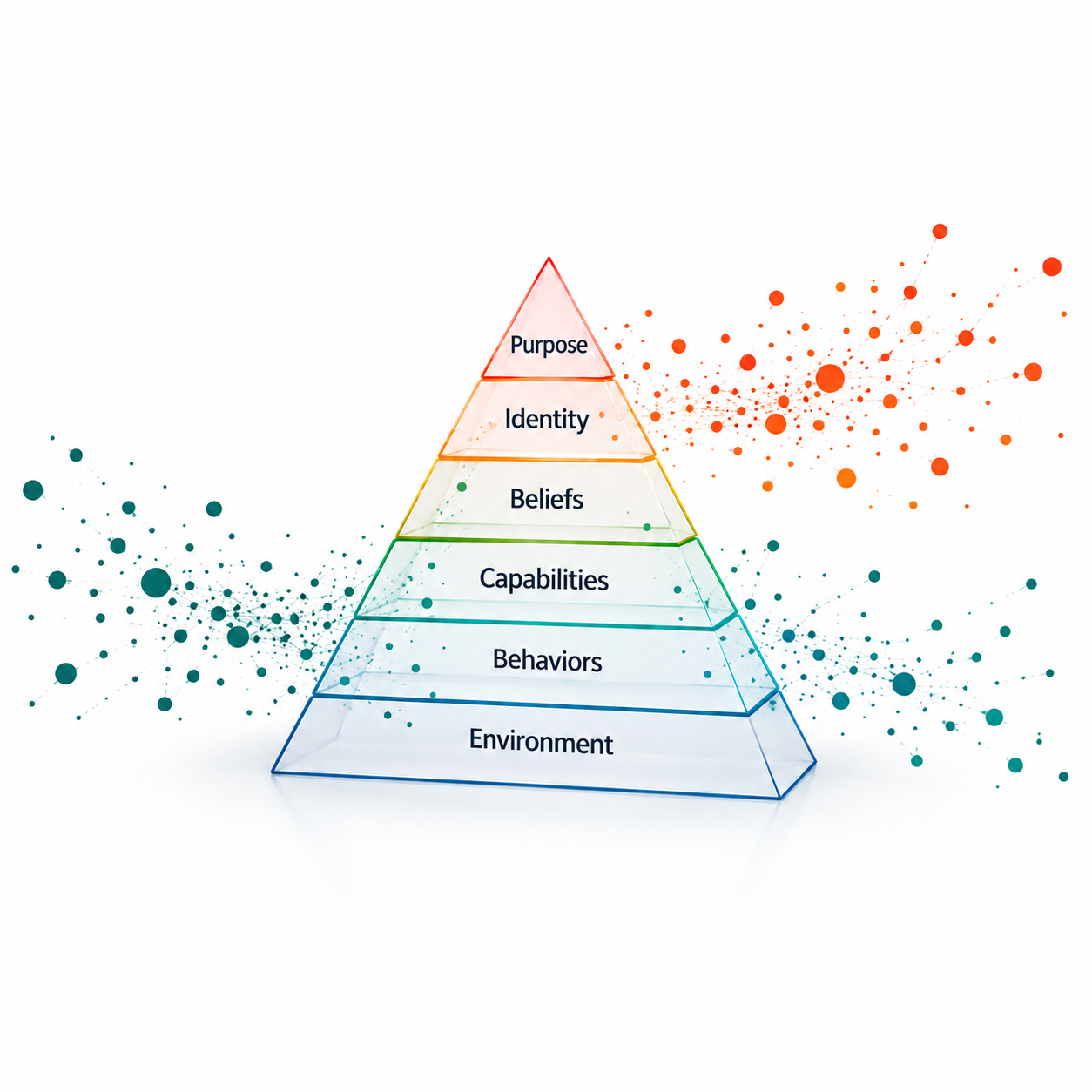
By bringing together the patterns that emerge from the journey, we step back to see the organization from a higher perspective and explore how its different layers connect. This creates new ways to approach challenges, solve problems and explore new possibilities for the organization’s evolution.
The result is an inspiring Identity Blueprint: a clear picture of your organizational DNA, putting into words your distinctive strengths, shared and lived values, sources of excellence, and renewed Who, Why and How.
Step 3: We own it

We share the insights of the journey with teams, creating space for recognition, dialogue and contribution.
Teams can see themselves in what has emerged, enrich the identity vocabulary and reflect together on how to bring the identity to life in everyday words, behaviours and images.
Step 4: We express it
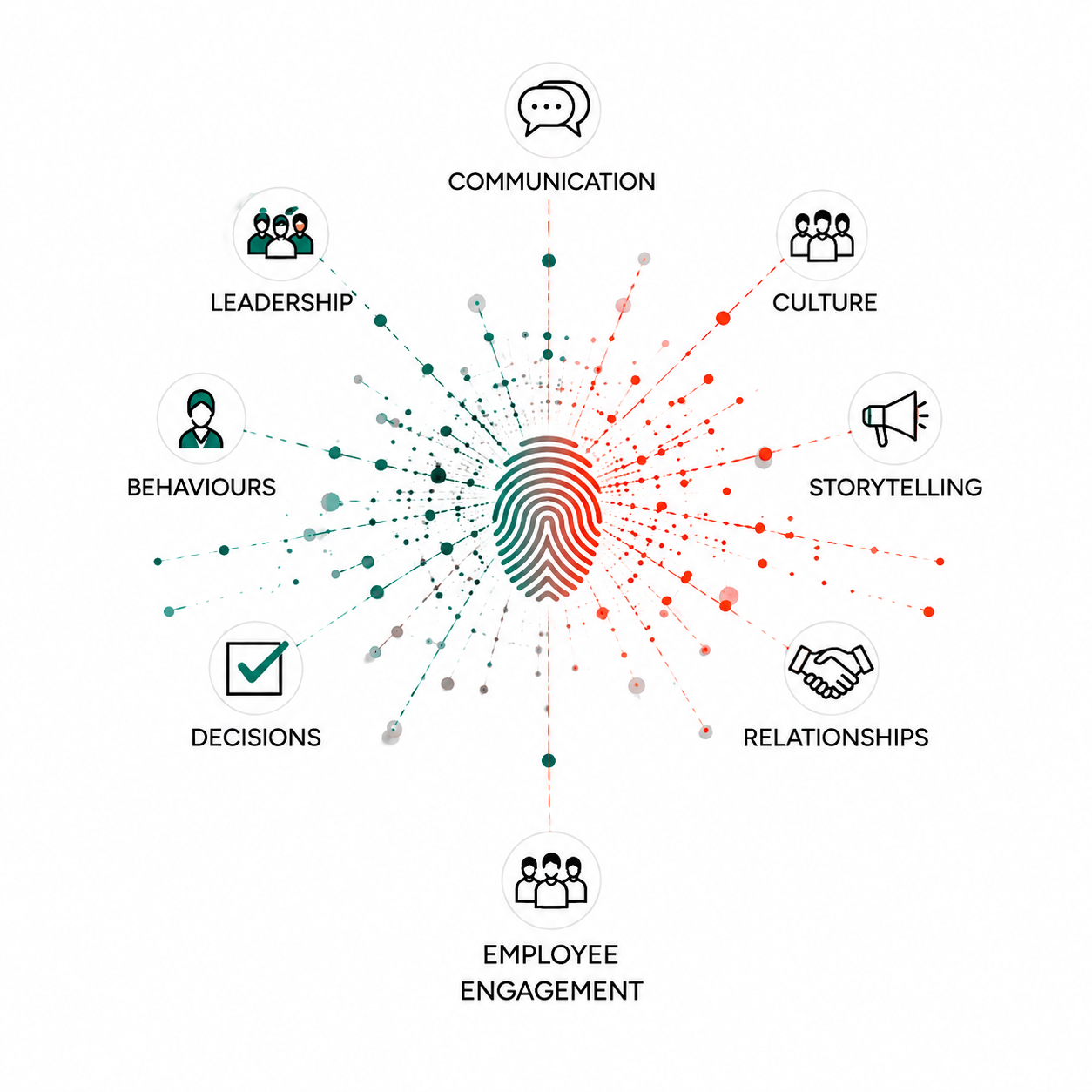
We bring the identity to life across the organization, translating it into content and communication materials adapted to different audiences: internal, employer brand and external customers.
A dedicated track supports the management in making the identity their own and embodying it through their leadership.
From what we communicate to how we lead, the identity becomes tangible, relevant and consistent.
Step 5: We embed it

Once identity becomes a shared reference point, it can guide how the organization functions and performs.
Leaders can use it to make clearer decisions, address recurring challenges and create the conditions for people and teams to perform at their best. Identity becomes a practical framework for growth, not just a statement about who you are.
How can this translate into value across key areas of your organization?
-
Helps to identify the organisation's core strengths and define a clear vision and mission in line with its authentic identity.
Ensures that the vision and mission make sense to all stakeholders and provide long-term strategic direction.
-
Align the organisation's public identity with its internal values, ensuring credibility and differentiation in the marketplace.
Supports the creation of a unique and enduring brand narrative.
-
Strengthens the robustness of the business model by anchoring it in the organisation's enduring strengths.
Guides your strategic decisions within your various departments.
-
Reduces resistance to change by embedding initiatives in the organisation's bigger purpose.
Creates a 'sense- making energy’ to stimulate commitment and momentum during change.
-
Attract the best talent by fostering an authentic, purpose-driven work environment.
Differentiate the organisation in a competitive job market and attract candidates who align with the culture.
-
Ensures greater consistency between environmental, social and governance commitments and the organisation's values.
Enables the development of a credible and differentiating ESG strategy that meets the growing expectations of investors, customers and employees.
-
Guides talent retention strategies in line with organisational values.
Optimises performance management systems to reinforce identity-aligned behaviors.
-
Stimulates creative problem solving by using a deep understanding of the organisation's strengths.
Align innovation strategies with identity to ensure relevance and sustainability.
-
Strengthens the sense of belonging by bringing out the organisational unconscious (shared values, beliefs and rituals).
Fosters collaboration by understanding the inter-dependencies of the system and its generative complementarities
-
Cultivates leadership practices rooted in organisational identity, fostering authenticity and impact.
Enables adaptive, servant leadership with a systemic approach to managing complexity in a changing world.
-
Ensures that external messages authentically reflect the organisation's identity.
Creates an emotional connection that builds loyalty with target audiences through consistent storytelling.
-
Facilitates harmonious cultural integration by identifying and blending the essential attributes of both entities.
Avoids identity conflicts by providing a unified strategic framework.
-
Increases employee motivation and loyalty by fostering a shared sense of purpose.
Aligns individual and organisational values
-
Shapes workspaces to reflect the culture and values of the organization
Encourages collaborative working practices to achieve common goals
-
How do you (re)define your role to stay relevant to our members?
How do you balance your sector’s vision with your members’ individual interests?
Step 6: We evaluate and monitor
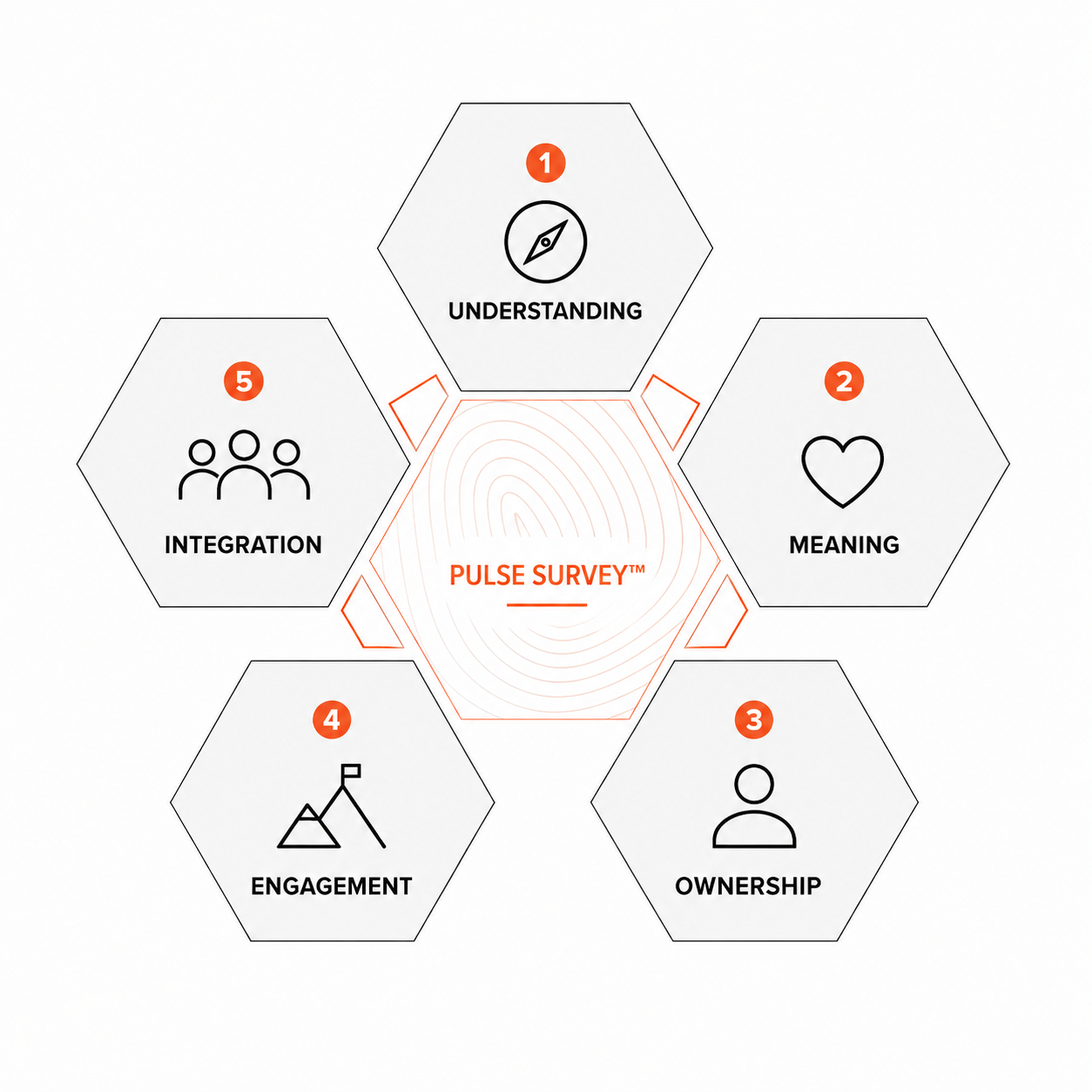
Identity creates value when people understand it, connect with it and bring it to life. Our Organizational Identity Pulse™ measures this connection through the Identity Connection Score™ and tracks how it evolves over time.
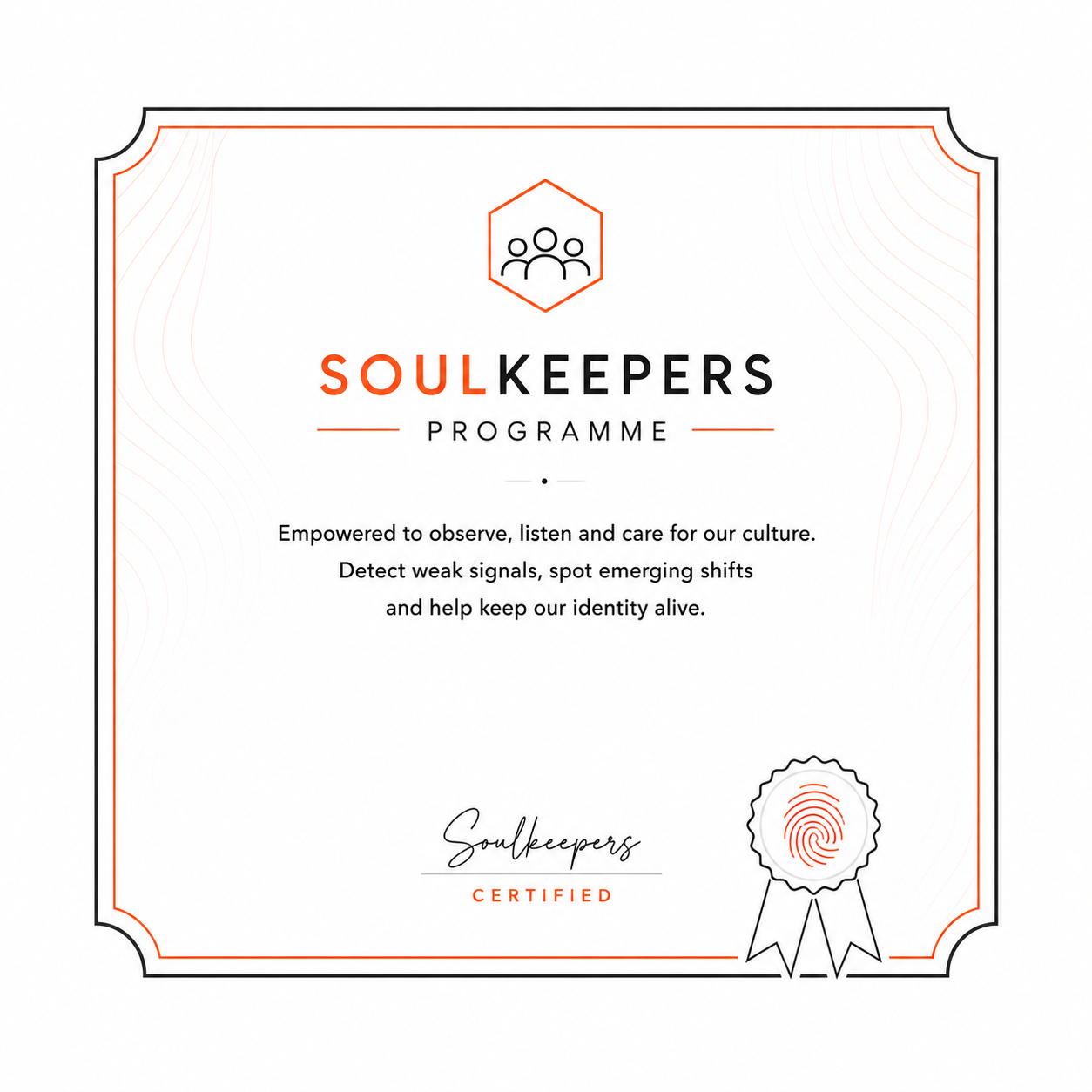
A qualitative Soul Keepers programme™ adds another perspective: people are trained to monitor the organization’s culture, detect weak signals and spot emerging shifts or misalignment. Together, these insights help leaders keep identity alive and recalibrate when needed.